





A comparative analysis of curing regimes of GGBFS and fly ash based alkali activated concrete
ABSTRACT. Alkali-activated concrete (AAC) is a sustainable concrete system using alkali-activating aluminosilicate precursors (e. g., fly ash (FA), slag). AAC requires careful curing as its mechanical and durability properties are majorly affected by its curing conditions. This study presents an experimental work covering the influence of various curing regimes on the short-term mechanical properties of AAC formulated with a blend of ground granulated blast furnace slag (GGBFS) and FA on different compressive strengths. The hybrid GGBFS-FA based AAC cured under ambient or membrane conditions has shown good strength development kinetics and emerges as a practical, energy-efficient, and environmentally sustainable alternative to conventional concrete for structural applications.
Keywords: alkali-activated concrete, fly ash, ground granulated blast furnace slag, GGBFS, curing regime, compressive strength, mercury intrusion porosimetry.
1. Introduction
The industrialisation and urbanisation have boosted growth in the construction sector, but at the cost of environmental impact. Cement is an essential material in the construction industry. With rapid urbanization, the demand for cement continues to rise, and it is estimated that by late 2050, the construction sector will require around 6 Mt of cement annually [1]. However, cement production is energy-intensive and significantly impacts the environment, accounting for approximately 7—8 % of global CO₂ emissions [2]. For every tonne of cement produced, about 0.6—0.8 tonnes of CO₂ are released into the atmosphere [3].
This growing concern over environmental degradation has driven research into sustainable alternatives, among these, alkali-activated concrete (AAC). AAC utilizes industrial by-products like fly ash (FA) or slag as a precursor, made by alkaline (e. g., sodium hydroxide or sodium silicate) activation, to form a cementitious binder without the need for clinker production, which significantly reduces the CO₂ emissions as compared to conventional concrete [1—6].
The amorphous aluminosilicate gel structure is formed when a highly alkaline solution is reacted with FA as a precursor in AAC [2]. The alkali hydration of slag occurs, forming C-S-H gel as the major hydration product in the reaction [7—8].
The compressive strength of AAC depends on various factors such as the type of precursors, alkaline concentration, curing temperature, and duration, etc. The FA‑based geopolymer concrete shows maximum compressive strength of AAC at the curing temperature of 90 °C for a curing period of 24 h [9]. However, other studies found different optimum temperatures in the range of 60—90 °C [9—12]. Higher temperature or prolonged curing time can result in marginal or even negative effects, such as cracking, excessive shrinkage, or reduction in long-term durability.
It has been reported that higher curing temperature enhances the mechanical properties of alkali-activated concrete. The mechanical properties enhance with an increase in curing duration, but an insignificant improvement is observed even if curing is extended above 24 hours [13—14]. Studies have shown that compressive strength can be up to seven times higher after 7 days of hot curing (typically at around 70 °C) compared to ambient conditions, and nearly double at 28 days in the case of FA‑based system [15—16]. These curing temperatures enhance the polymerization reaction, producing a denser and more interconnected microstructure, which leads to better mechanical and durability properties in the AAC matrix.
Unlike FA‑based systems, increasing the curing temperature (up to about 90 °C) tends to reduce the compressive and mechanical properties of GGBFS‑based AAC concrete by an average of 22 %, whereas it increases strength for FA‑based AAC [17]. GGBFS‑based AAC generally achieves good strength even under ambient temperature curing, making it practical and advantageous for in-situ and large-scale applications. This is because in GGBFS‑based systems, calcium rapidly reacts at ambient temperature with alkaline activators to form calcium-alumino-silicate-hydrate (C-A-S-H) gels, which develop strength efficiently at low temperatures. However, in FA‑based AAC, higher temperatures are necessary to activate aluminosilicate dissolution and polymerization, leading to increased formation of strong N-A-S-H gels [17—19].
Increasing GGBFS content in the mix enhances strength and densifies the microstructure. Higher curing temperatures can accelerate setting but may introduce porosity and microcracking, which decrease durability and strength in GG BFS systems. Optimal curing for GGBFS‑based AAC can be achieved at ambient temperature or slightly elevated conditions (up to around 60 °C for 24 h in certain hybrid or blended systems with additives).
Water curing causes delayed and incomplete geopolymeric reactions, leading to coarser, less dense microstructures and lower compressive strength, especially at early ages in the case of FA‑based systems [20—21]. GGBFS‑based AAC develops significant compressive strength under water curing, with research showing higher or comparable strength when compared to steam or heat curing methods, especially at later ages. Water curing reduces the risk of dehydration, microcracking, and shrinkage, leading to a denser, less porous microstructure in GGBFS‑based mixes. After 3 days of water curing, GGBFS‑geopolymer mortars often exhibit the highest early-age compressive strength, due to the rapid dissolution and reaction of calcium-rich GGBFS [22—23].
Membrane curing involves sealing the surface to retain moisture, which can offer some benefits under ambient conditions. Membrane curing helps maintain internal moisture, which is crucial for the dissolution of Si and Al from FA. This supports continued geopolymerization even without heat curing. Despite these benefits, membrane curing alone cannot match the strength development achieved through heat curing in the FA‑based system [24]. GGBFS‑based mixes cured under sealed conditions show significant early strength gain due to rapid calcium-driven reactions. GGBFS inclusion accelerates setting and early strength gain, often allowing ambient or membrane curing to yield satisfactory strength without the high temperatures required for FA‑only binders [25—26].
The different curing regimes and their microstructural characteristics are shown in Table 1.
Table 1
Curing regimes of AAC and their microstructural characteristics
| Curing regime | Gel formation | Pore structure | Matrix density and homogeneity | Ref. |
| Ambient with GGBS |
C-A-S-H, N-A-S-H |
More refined pore structure, fewer voids | Denser and more homogeneous matrix | 27 |
| Ambient with Flyash | N-A-S-H | Incomplete, dissolution, visible voids | Less uniform and structurally unsound | 28-30 |
| Accelerated Heat |
C-A-S-H, N-A-S-H |
Initial pore formation from water loss; subsequent pore-filling from accelerated geopolymerization | Can be heterogeneous due to rapid reaction; final density depends on water content | 31-32 |
| Water | Initial polymerization disruption; later C-A-S-H formation from the hydration process between lime and silica | Disruption of polymerization and leaching of alkali activators. Later, C-S-H gel forms and fills pores. Increased water content can increase pore size and total porosity. |
Initially, less sound due to leaching; subsequently densifies as C-S-H gel fills pores. Unlike OPC, an initial decrease in strength is observed. |
33- 34 |
This study examines the effect of four curing regimes — ambient, oven curing at 60 °C for 24 h, water curing at 27 °C, and membrane curing-on the short-term mechanical properties of AAC mixes. The M40 mix used FA and GGBFS in a 70:30 ratios, while the M60 mix used FA and (GGBFS+UF-GGBFS) in a 50:50 ratios.
2. Materials and methods
2.1. Materials
2.1.1. Precursors. GGBFS and FA have been used as cementitious binders to develop both concrete mixes. GGBFS used in this study was evaluated for its different physical and chemical characteristics mentioned in IS 16714:2018, and as per the test methods mentioned in IS 4032. FA used in this study was evaluated for its different physical, chemical, and mineralogical characteristics mentioned in IS 3812 (Part1):2013, as per the test methods mentioned in IS 1727. Based on chemical analysis, the FA is classified as Class F. The physical and chemical parameters are evaluated for GGBFS and FA, is shown in Tables 2 and 3, respectively.
Table 2
Physical characteristics of GGBFS and FA
| Binder |
Blaine’s fineness, m2/kg |
Specific gravity | Slag Activity Index, % |
Soundness (autoclave expansion), % |
Lime reactivity, N/mm2 |
|
| at 07 days | at 28 days | |||||
| GGBFS | 335 | 2.90 | 63.5 | 78.6 | — | — |
| FA | 324 | 2.33 | — | — | 0.03 | 5.10 |
| UF-GGBFS | 1870 | 2.93 | 86.0 | 105.0 | — | — |
Table 3
Chemical characteristics of GGBFS and FA, wt. %
| Binder | CaO | SiO2 | Al2O3 | Fe2O₃ | MgO | Na2Oeq | Cl– | SO3 | LOI* |
| GGBFS | 37.66 | 34.60 | 18.38 | 0.98 | 5.15 | 0.60 | 0.024 | 0.05 | 0.97 |
| FA | 5.80 | 48.66 | 26.72 | 8.87 | 1.43 | 0.74 | 0.026 | 0.75 | 4.67 |
| UF-GGBFS | 34.00 | 34.40 | 19.00 | — | 6.76 | — | 0.087 | 0.09 | 0.091 |
* LOI — Loss on ignition.
2.1.2. Alkaline solution. In the development of geopolymer concrete mixes, NaOH and sodium silicate were used as chemical activators, conforming to IS 252:2013 and IS 381:1995, respectively. The sodium hydroxide pellets employed exhibited a high purity of 97.16 %. The NaOH solution was prepared at least 10 hours prior to concrete casting, allowing sufficient time for the exothermic reaction with water to stabilize. The sodium silicate solution comprised 15.0 % Na2O, 33.0 % SiO2, and 52.0 % H2O. It was characterized by a light grey appearance, a relative density of 1.55 at 27 °C, and less than 0.01 % insoluble matter in water.
2.1.3. Aggregate. Coarse aggregates of 20 mm and 10 mm sizes, with specific gravities of 2.68 and 2.67, respectively, were used in the study. Crushed fine aggregate with a specific gravity of 2.64 was also utilized. Sieve analysis of both coarse aggregates (20 mm and 10 mm) as well as the fine aggregate was carried out in accordance with IS 2386 standards. The results of the analysis were found to be within the permissible limits specified in IS 383:2016.
2.2. Methodology
2.2.1. Mix design. The mix proportions for the geopolymer concrete (GPC) were developed to achieve the target workability and compressive strength. For the M40 mix, FA is used about 70 % and for the M60, FA is used about 50 % of the total binder percent. The water-to-cement ratio was 0.46 and 0.29, respectively, for M40 and M60 mixes. The UF-GGBFS was used in M60 aimed at improving early-age strength, reducing porosity, and enhancing microstructural density, making it suitable for high-performance AAC applications. Mix was designed to have a slump of 80—90 mm after 60 minutes. Naphtha-based superplasticizers are used due to their superior ability to improve workability and dispersion of binder particles in highly alkaline environments to achieve the desired workability at a given water content [27]. The two mixes with target strength of 40 MPa and 60 MPa are shown in Table 4.
Table 4
Mix details of AAC mix
|
Mix ID |
Binder | Effective water content | Chemical activators, kg/ m3 |
Admixture, % |
Sand, kg/m3 | Aggregate, kg/m3 | ||||
| FA | GGBFS | UF-GGBFS | NaOH | NaSiO3 | 10 mm | 20 mm | ||||
| M40 | 300 | 128 | — | 91 | 26 | 178.0 | 0.9 | 662.0 | 494.0 | 606.0 |
| M60 | 300 | 240 | 60 | 125 | 37 | 109.1 | 3.0 | 373.8 | 533.1 | 533.1 |
2.2.2. Mixing procedure. The coarse aggregates (20 mm and 10 mm), fine aggregate, and the solid precursor materials were introduced into a pan mixer. These dry constituents were mixed together for 2—3 minutes to achieve a homogeneous mix. After this, the sodium silicate solution was added to the dry mix and mixed for 1 minutes. The high viscosity of sodium silicate helps in initially coating the solid particles. After this, NaOH solution and the naphtha-based superplasticizer were added simultaneously to the mixer. The mixing was continued to achieve cohesive and uniform concrete mix with the desired workability was achieved. The total mixing time was carefully controlled to avoid segregation. Immediately after mixing, the fresh concrete was placed into the 150 mm moulds in three layers. Each layer was compacted using a vibrating table to ensure proper compaction and the removal of entrapped air. The vibration of the cube samples is shown in Figure 1. The entire mixing process was conducted at ambient laboratory temperature (approx. 27 ± 2 °C).
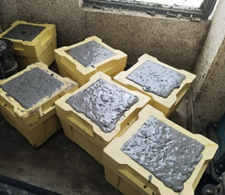
Figure 1. Vibration of the concrete
2.2.3. Curing of specimens. The concrete cubes of strength 40 MPa and 60 MPa were prepared for carrying out compressive strength in the laboratory. The specimens were demoulded after 24 hours. The specimens were send to different curing regimes to investigate their mechanical properties.
1) Ambient Curing: The demoulded specimens were stored in the ambient conditions in shaded area. It is noted that the average daytime temperature in Delhi ranged from 27 to 38 °C in Automn season, while at night it is above 32 °C. No additional moisture or temperature control was provided. This regime serves as the baseline for comparing the effectiveness of other accelerated or controlled curing methods.
2) Membrane Curing: Upon demoulding, the entire surface of the specimens was sealed in a plastic to form an impermeable membrane. The sealed specimens were then stored in the ambient conditions (same as the AC regime). This method aims to retain the internal moisture within the concrete, which is crucial for the continuation of the geopolymerization process without external water application or heat. The membrane curing specimen at Ambient Condition is shown in Figure 2 (a).
3) Oven Curing: After demoulding, the specimens were placed in an oven at 60 ± 2 °C for a duration of 24 hours. After this heat treatment, the specimens were stored under ambient conditions until the day of testing. This regime is designed to accelerate the geopolymerization reaction, particularly for the flyash component. The cube specimen for oven curing in the oven is shown in Figure 2 (b).
4) Water Curing: The demoulded specimens were fully immersed in a water tank maintained at a constant temperature of 27 ± 2 °C. The specimens remained submerged until the testing. This regime assesses the effect of continuous external moisture supply on the reaction kinetics and long-term strength development. The water curing specimen in the curing tank is shown in Figure 2 (c).
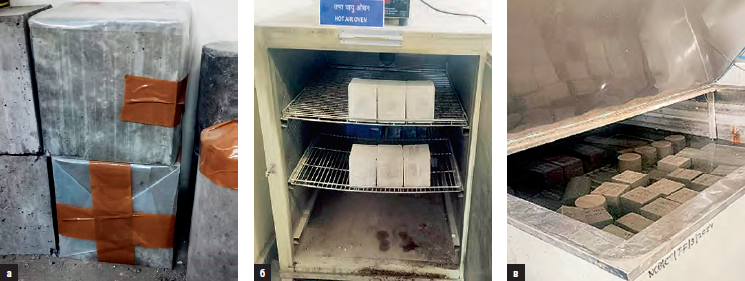
Figure 2. Curing of specimens: Membrane Curing (a), Oven Curing (b), and Water Curing (c)
3. Results and discussion
3.1. Compressive Strength
The compressive strength test results of M40 and M60 AAC are shown in Figure 3 (a) and Figure 3 (b), respectively.
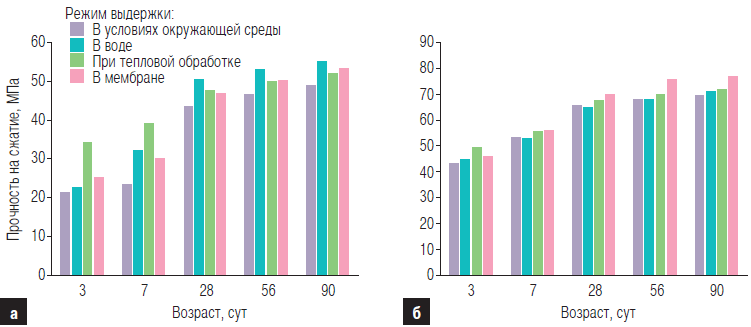
Figure 3. Compressive strength of cube specimens at different ages for M40 concrete (a) and M60 concrete (b)
For the M40 mix, which is FA‑dominant, oven curing yielded the higher early days compressive strength. This is because of accelerated aluminosilicate dissolution and polymerization at elevated temperatures, promoting rapid formation of N-A-S-H gels and a denser matrix, which enhances early-age strength [9—12].
Ambient curing resulted in the lowest 28-day value reflecting gradual C-A-S-H formation in GGBS‑blended systems under room conditions, though it approached the target strength with extended time at 56 days. This is because, as flyash requires thermal activation for aluminosilicate reaction, that’s why heat-based regimes outperform ambient ones in M40. While in the Ambient condition, insufficient early dissolution limits gel networking and leaves unreacted particles, as confirmed by microstructural studies showing incomplete N-A-S-H in ambient-cured flyash systems [28—30]. Overall, Ambient curing has attained 48 % of its 28-day strength at 3 days, and about 54 % of its strength at 7 days. The ambient cured specimen showed 20 % less strength than oven cured at 28 days. However, the strength variation is less at the age of 56 and 90 days.
The water cured specimens have been shown to attain 44 % and 64 % of its strength at 3 and 7 days, respectively. In low-calcium systems, water curing may lead to leaching and a reduction in compressive strength [31].
The oven-cured specimen has attained more than 2/3 of its strength in just 3 days.
The membrane curing shows greater strength as compared to ambient curing at all ages, as it retains internal moisture to sustain geopolymerization without excessive evaporation, leading to uniform gel development and reduced shrinkage cracks [24—26]. The compressive strength of Ambient Curing, Oven Curing and Membrane Curing was comparable at 28, 56, and 90 days.
In the M60 mix, enriched with GGBFS and UF-GGBFS, with equal proportion of flyash. The incorporation of UF-GGBFS lowers the water absorption, reductions in total porosity and reduces permeability improving overall packing density and enhances mechanical property and improves durability. It also improved workability and consistency due to the finer particle size, which smooths the fresh concrete’s flow and reduces bleeding, as indicated by higher slump and compaction factor readings. applications. In this mix, oven curing showed maximum compressive strength at 3, 7 days, attributed to enhanced reaction kinetics that densify the C-A-S-H and hybrid C-(N)-A- S-H gels without inducing thermal cracks at the moderate 60 °C.
The compressive strength at 28, 56, and 90 days is comparable in all curing regimes. However, the membrane curing showed the highest strength at 7, 28, 56, and 90 days of age, because of moisture preservation that minimizes surface dehydration and promotes homogeneous gel maturation [24—26]. Water curing showed better strength as compared to ambient cured at 28 days, as water immersion supports hydration for calcium-rich GGBS while reducing microcracking risks [22—23]. Ambient curing showed lower early strength but still achieved target strength at 28 days. This shows that higher GGBS content lowers the dependency on heat for activation, enabling robust C-A-S-H gel formation by 28 days, whereas flyash-heavy mixes like M40 show delayed polymerization without thermal input [17—19, 32, 33].
Comparison of results. Oven curing accelerated early strength in low calcium based system. However, inclusion of GGBFS incorporated the ambient curing and shown comparable strength at all ages as shown in case of M60 concrete. It should be noted that excessively high temperatures or prolonged heating can cause microcracking or the formation of undesirable crystalline phases [34].
These outcomes validate that hybrid GGBFS-FA AAC meets design strengths at 28 days with lower CO2 emissions than OPC, supporting practical applications [15—16, 35]. For field use, ambient or membrane curing is preferable to optimize energy efficiency while ensuring 28-day performance [25—26, 33, 35].
3.2. Mercury Intrusion Porosimetry study
Mercury Intrusion Porosimetry (MIP) is a widely used technique to characterize the pore structure of cement-based materials, particularly in concrete. It provides quantitative information about the distribution of pore sizes, total porosity, and pore volume in concrete. MIP measures how mercury intrudes into the porous structure under controlled pressure, enabling the determination of pore size from the pressure data using the Washburn equation. The limitation of MIP is that it doesn’t actually measure internal pore size but measures largest connection to pore. The cumulative pore volume versus pore diameter for the M40 and M60 concrete mixes is presented in Figure 4 (a) and Figure 4 (b), respectively.
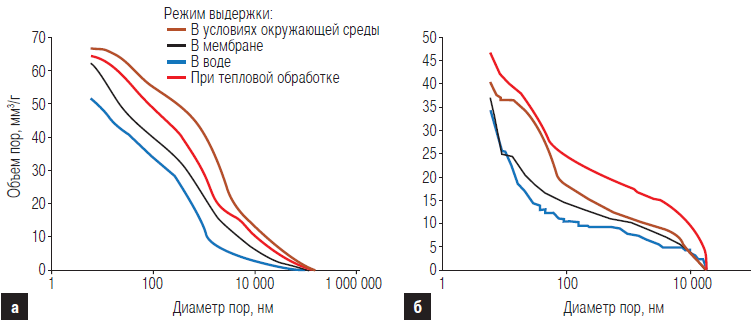
Figure 4. Cumulative pore volume versus pore diameter for the M40 (a) and M60 (b) concrete mixes
For the M40 concrete, ambient curing resulted in the highest total porosity. This is attributed to slow reaction kinetics at ambient temperature, which leads to incomplete dissolution of flyash and insufficient geopolymer gel formation, resulting in a porous and discontinuous matrix. The oven-cured concrete showed more porosity as compared to water curing because of the microcracks at higher temperatures. The membrane curing showed lower porosity than that of ambient curing but higher than that of water curing. The high porosity of ambient curing supports the lowest strength obtained in this condition.
In the case of the M60 concrete, which contains GGBFS and FA in equal proportion, ambient and oven curing exhibited comparably high total porosity. The total porosity values for M60 were lower than those for M40 across all regimes, due to the more efficient reaction of GGBFS even at ambient temperatures and the inclusion of UF-GGBFS in the M60 mix. Membrane curing demonstrated lower porosity than both ambient and oven curing, but higher than water curing. The lowest porosity was achieved with water curing. This can be attributed to the continuous moisture supply, which supports the progressive formation of C-A-S-H and C-S-H gels from the GGBFS. These gels efficiently fill and segment the capillary pore network, leading to a denser microstructure and higher 28-day strength.
4. Conclusions
This study comparatively evaluated the influence of ambient, membrane, oven, and water curing regimes on the mechanical performance of GGBFS‑FA-based alkali-activated concrete (AAC). The results clearly show that curing conditions significantly affect strength development, porosity depending on the mix composition.
For the flyash-rich mix (M40), oven curing provided superior early-age strength due to accelerated geopolymerization, while membrane curing demonstrated improved performance over ambient curing by retaining internal moisture. On the other hand, the GGBFS‑rich mix (M60) showed comparable performance across all curing regimes, with membrane curing delivering the highest strengths at later ages and water curing producing the lowest porosity. This highlights the role of calcium-rich GGBFS in promoting C-A-S-H gel formation even under ambient conditions.
Mercury Intrusion Porosimetry confirmed that ambient curing led to higher porosity in FA‑rich mixes, while water and membrane curing reduced pore volume and produced denser matrices. For GGBFS‑blended systems, ambient and oven curing exhibited relatively higher porosity, whereas water curing achieved the densest microstructure.
Overall, the findings establish that curing regime selection must be done according to the mix composition. Oven curing is most beneficial for FA‑based AAC to achieve rapid early strength, whereas ambient and membrane curing are more sustainable and effective for GGBFS‑rich systems, ensuring long-term performance without excessive energy input. Thus, hybrid GGBFS–FA‑based AAC cured under ambient or membrane conditions emerges as a practical, energy-efficient, and environmentally sustainable alternative to conventional concrete for structural applications.
REFERENCES
1. Trivedi A., Ojha P.N., Singh A., Singh B., et al. Experimental investigations on mechanical properties of normal and high strength high calcium geopolymer concrete // J. Asian Concrete Federation. 2022. Vol. 8, N 1. P. 16—25.
2. Ojha P.N., Singh B., Trivedi A., Singh P., et al. Short-term mechanical performance and flexural behavior of reinforced slag-flyash-based geopolymer concrete beams in comparison to OPC‑based concrete beams // Res. Eng. Struct. Mater. 2023. Vol. 9, N 1. P. 31—51.
3. Guo Y., Luo L., Liu T., Hao L., et al. A review of low-carbon technologies and projects for the global cement industry // J. Environ. Sci. 2024. Vol. 136. P. 682—697.
4. Ojha P.N., Singh B., Kaura P., Singh A. Light weight geopolymer flyash sand: An alternative to fine aggregate for concrete construction // Res. on Engin. Structures Mater. 2021. Vol. 7, N 3. P. 375—391.
5. Davidovits J. Application of Ca-based geopolymer with blast furnace slag — A review // 2nd Intern. Slag Valorisation Symp. 2011. P. 33—49.
6. Singh P., Singh B., Ojha P.N., Singh A., et al. Fracture behavior of slag flyash-based geopolymer concrete in comparison with OPC‑based conventional concrete including the effect of steel and hybrid fibers // Revista Ingeniería de Construcción. 2023. Vol. 38, N 2. P. 361—381.
7. Shi C., Roy D., Krivenko P. Alkali-activated cements and concretes. CRC Press, 2006.
8. Negahban E., Bagheri A., Sanjayan J. Pore structure profile of ambient temperature-cured geopolymer concrete and its effect on engineering properties // Construction and Building Mater. 2023. Vol. 406. P. 133311.
9. Nagral M.R., Ostwal T., Chitawadagi M.V. Effect of curing temperature and curing hours on the properties of geo-polymer concrete // Intern. J. Computational Engin. Res. 2014. Vol. 4, N 9. P. 1—11.
10. Hardjito D., Wallah S.E., Sumajouw D.M., Rangan B. Factors influencing the compressive strength of flyash-based geopolymer concrete // Civil Engin. Dimension. 2004. Vol. 6, N 2. P. 88—93.
11. Sindhunata, Lukey G.C., Xu J. The effect of curing conditions on the properties of geopolymeric materials derived from flyash // Intern. RILEM Symp. on Concrete Sci. and Engin.: A Tribute to Arnon Bentur. 2004.
12. Duxson P., Fernández-Jiménez A., Provis J.L., Lukey G.C., et al. Geopolymer technology: The current state of the art // J. Mater. Sci. 2007. Vol. 42, N 9. P. 2917—2933.
13. Singh B., Ishwarya G., Gupta M., Bhattacharyya S.K. Geopolymer concrete: A review of some recent developments // Construction and Building Mater. 2015. Vol. 85. P. 78—90.
14. Nuruddin M.F., Malkawi A.B., Fauzi A., et al. Effects of alkaline solution on the microstructure of HCFA geopolymers // Engineering Challenges for Sustainable Future. Proc. 3rd Intern. Conf. on Civil, Offshore and Envir. Engin., ICCOEE. 2016. P. 501—506.
15. Patil A.A., Chore H.S., Dodeb P.A. Effect of curing condition on strength of geopolymer concrete // Advances in Concrete Construction. 2014. Vol. 2, N 1. P. 29—37.
16. Li Q., Chen S., Zhang Y., Hu, Y., et al. Effect of curing temperature on high-strength metakaolin-based geopolymer composite HMGC with quartz powder and steel fibers // Materials. 2022. Vol. 15, N 11. P. 3958.
17. Morsy A.M., Ragheb A.M., Shalan A.H., Mohamed O.H. Mechanical characteristics of GGBFSFA‑based geopolymer concrete and its environmental impact // Practice Periodical on Structural Design and Construction. 2022. Vol. 27, N 2. P. 04022017.
18. Pradhan J., Panda S., Parhi S.K., Pradhan P., et al. GG BFS‑based self-compacting geopolymer concrete with optimized mix parameters established on fresh, mechanical, and durability characteristics // J. Mater. in Civil Engin. 2024. Vol. 36, N 2. P. 04023578.
19. Jamil N.H., Abdullah M.M., Pa F.C., et al. Self-fluxing mechanism in geopolymerization for low-sintering temperature of ceramic // Materials. 2021. Vol. 14, N 6. P. 1325.
20. Paruthi S., Rahman I., Khan A.H., Sharma N., et al. Strength, durability, and economic analysis of GGBS‑based geopolymer concrete with silica fume under harsh conditions // Sci. Reports. 2024. Vol. 14, N 1. P. 31572.
21. Wei T., Zhao H., Ma C. A comparison of water curing and standard curing on one-part alkali-activated flyash sinking beads and slag: Properties, microstructure and mechanisms // Construction and Building Materials. 2021. Vol. 273. P. 121715.
22. Oti J., Adeleke B.O., Casabuena L.R., Kinuthia J.M., et al. Utilization of a PFA-GGBS‑based precursor in geopolymer concrete production as a sustainable substitute for conventional concrete // Materials. 2025. Vol. 18, N 6. P. 1309.
23. Chithra S., Dhinakaran G. Effect of hot water curing and hot air oven curing on admixed concrete // Intern. J. of ChemTech Res. 2014. Vol. 6, N 2. P. 1516—1523.
24. Goriparthi M.R., Rao T.D.G. Effect of flyash and GGBS combination on mechanical and durability properties of GPC // Advances in Concrete Construction. 2017. Vol. 5, N 4. P. 313—330.
25. Pangdaeng S., Phoo-ngernkham T., Sata V., Chindaprasirt P. Influence of curing conditions on properties of high calcium flyash geopolymer containing Portland cement as additive // Mater. Design. 2014. Vol. 53. P. 269—274.
26. Sherwani A.F.H., Younis K.H., Arndt R.W. Fresh, mechanical, and durability behavior of flyash-based self-compacted geopolymer concrete: Effect of slag content and various curing conditions // Polymers. 2022. Vol. 14, N 15. P. 3209.
27. Tian Y., Li S., Yuan Q., Yu L., et al. Improving the dispersion efficiency of naphthalene superplasticizer in alkali-activated slag pastes by regulation of Lewis acids // Construction and Building Mater. 2025. Vol. 467. P. 140449.
28. Zannerni G.M., Fattah K.P., Al-Tamimi A.K. Ambient-cured geopolymer concrete with single alkali activator // Sustainable Mater. and Technol. 2020. Vol. 23. P. e00131.
29. Shamsah M., Kalfat R., Subramaniam K.V., Hanumananaik M. Calcium enhanced ambient cured flyash based geopolymer binders // Sci. Rep. 2025. Vol. 15, N 1. P. 1—14.
30. Biondi L., Perry M., Vlachakis C., Wu Z., et al. Ambient cured flyash geopolymer coatings for concrete // Materials. 2019. Vol. 12, N 6. P. 923.
31. Mohamed O., Najm O., Shaji S.F. Influence of NaOH activator concentration on efflorescence and compressive strength of sustainable mortar with alkali-activated slag and flyash binders. Manuscript submitted for publication, 2025.
32. Jindal B.B. Feasibility study of ambient cured geopolymer concrete — A review // Advances in Concrete Construction. 2018. Vol. 6, N. 4. P. 387—405.
33. Naghizadeh A., Ekolu S. O., Tchadjie L.N., Solomon F. Long-term strength development and durability index quality of ambient-cured flyash geopolymer concretes // Construction and Building Mater. 2023. Vol. 374. P. 130899.
34. Provis J.L. Alkali-activated materials // Cement and Concrete Res. 2018. Vol. 114. P. 40—48.
35. Trivedi A., Goel R., Kumar R., Singh B., et al. Alkali activated concrete for RMC application: construction of demo structure and load test // The Indian Concrete J. 2025. Vol. 99, N 8.
| Author: Amit Trivedi, Rajeev Goel, Rakesh Kumar, Rohit Kumar, Brijesh Singh |
| Section: Concrete |
| Keywords: alkali-activated concrete, fly ash, ground granulated blast furnace slag, GGBFS, curing regime, compressive strength, mercury intrusion porosimetry |