





News
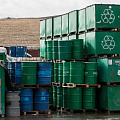
On September 23, FAO, together with the Agency for Waste Management and Circular Economy Development of Uzbekistan, held a roundtable in Tashkent with representatives of government authorities and the cement industry.

Votorantim Cimentos has announced an investment of BRL 260m to expand its cement plant in Xambioá, Tocantins, Brazil. The project includes the construction of a new cement grinding line, which will increase the plant's production capacity by 500,000tpa to 1.5Mta. The new line is scheduled to begin operations in July 2028.

Heidelberg Materials has changed the concept for CO₂ transport and storage as part of the ANRAV decarbonisation project at the Devnya cement plant in Bulgaria. The company has opted for local underground CO₂ storage close to the plant instead of the initially considered option of injection under the Black Sea.

Holcim Polska and Geocycle have conducted a technological trial at the Małogoszcz cement plant, during which clinker and cement were produced for several days without the use of coal. The process was powered entirely by alternative fuels.

Belarusian Cement Company continues to implement environmental initiatives aimed at reducing CO₂ emissions and improving operational efficiency through the expanded use of alternative fuels.
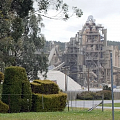
Cement Australia has temporarily suspended operations at its Railton cement plant in Tasmania to upgrade the kiln fuel feeding and firing system. The project represents an investment of AUD 106 million (Australian dollars), including AUD 59.6 million in funding from the Australian Government.
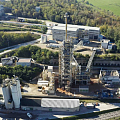
The Vicat Group accelerates industrial decarbonisation in France with two alternative energy projects at two of its cement plants, supported by the French Ecological Transition Agency (ADEME) and industrial partners.